
Introduction: When the Body Speaks Before the Tests Do
Many women experience vaginal symptoms that feel real and persistent, yet clinical tests initially return normal results. Changes in discharge, mild irritation, altered sensation, or subtle discomfort are often dismissed as transient or non-specific. However, research in vaginal biology increasingly supports a different explanation: early symptoms can reflect physiological change that is real, but still below the detection threshold of routine diagnostics.
The vaginal environment is highly dynamic. Cellular signalling, immune activation, hormonal modulation, and microbial balance respond quickly to internal and external stressors. These processes may shift well before laboratory thresholds for infection or pathology are reached, which helps explain why symptoms can appear before clinical confirmation. This “timing gap” matters, not only for diagnostic sensitivity, but also for validating patient reported experiences in a medically meaningful way.
The Vaginal Environment as an Early Response System
The vagina functions as a complex mucosal ecosystem rather than a passive anatomical site. Vaginal epithelial cells actively participate in immune surveillance, barrier maintenance, and microbial regulation. When exposed to disruption whether hormonal, inflammatory, or microbial these cells can initiate rapid biological responses.
Experimental and clinical work shows that mucosal epithelial surfaces can release cytokines and chemokines early in the inflammatory cascade, sometimes before changes become obvious on routine clinical testing. In the context of vaginal ecology, this host microbe “cross talk” is widely discussed in microbiome research, including foundational descriptions of vaginal community patterns and stability. These early immune signals can increase tissue sensitivity and alter secretion patterns. In practice, that can look like mild burning, itch, or discharge changes symptoms that are meaningful, even if a swab is “negative” that day.
Microbiome Transitions Before Infection Thresholds
Subclinical microbial imbalance
A healthy vaginal microbiome is often dominated by Lactobacillus species, which help maintain an acidic pH and inhibit opportunistic pathogens. But microbial balance exists along a spectrum, not a simple healthy/unhealthy switch. Transitional states can occur in which Lactobacillus dominance decreases without meeting diagnostic criteria for infection.
A widely cited explanation of this nuance is why “Lactobacillus dominance” is helpful but in these intermediate states, women may notice symptoms (irritation, odour shifts, discharge differences) even while point in time tests remain inconclusive.
Diagnostic lag in microbial assessment
Most clinical tests are designed to identify established dysbiosis or infection rather than early microbial instability. For example, common approaches may detect BV when it is clinically apparent, but not necessarily when the ecosystem is moving toward BV. This is one reason symptoms can lead to test results.
Hormonal Fluctuations and Tissue Sensitivity
Hormones exert a powerful influence on vaginal tissue structure and function. Oestrogen supports epithelial thickness, glycogen availability, and microbial stability, while progesterone alters immune tone and mucus composition. Rapid hormonal transitions around ovulation, during periods of high stress, postpartum, perimenopause, or after stopping hormonal contraception can temporarily reduce mucosal resilience.
This matters clinically because hormone linked changes can alter sensation without being an infection. Some women describe it as “everything feels raw” or “my normal discharge feels different.” That can happen even when a standard infection panel is negative.
Hormone driven vulnerability is also a recognised reason some people experience recurring symptoms with cyclical timing, even when the cause varies (microbiome, irritation, immune activation, or a mixture).
Neuroimmune Signalling and Symptom Perception
Vaginal tissue is densely innervated, and sensory nerves interact closely with immune and epithelial cells. This neuroimmune interface allows the body to detect irritation early and generate sensation before visible structural abnormalities develop.
In plain terms: the tissue can “notice” change before a test can. Low grade inflammation can increase sensory signalling, amplifying awareness of burning, itching, or discomfort. Neuroimmune mechanisms are increasingly discussed across mucosal and pain research, and they are particularly relevant when symptoms are persistent but hard to capture on single time-point testing.
Clinical Interpretation of Early Symptoms
Symptoms as diagnostic context
Rather than viewing symptoms as unreliable, many clinicians treat them as valuable contextual data especially when they are new, persistent, patterned, or recurrent. Early vaginal symptoms may indicate:
- Low grade inflammation that has not yet progressed to diagnosable infection.
- Emerging microbial instability, increasing susceptibility to dysbiosis.
- Hormonal or stress related tissue sensitivity, affecting comfort and perception.
- Irritant exposure, such as fragranced products, harsh cleansers, or repeated friction.
It is also important to remember that not all vaginal symptoms are caused by BV. Two other major causes each with specific testing and management are vulvovaginal candidiasis and trichomoniasis.
Why “normal” tests can still happen
A negative result can be truly reassuring but it can also reflect timing, sampling, or method. A swab taken on a “better day,” early in a shift, or after self treatment can miss what is evolving. This does not mean the symptom was imagined; it may mean the biological signal was present, but not captured with that tool at that moment.
Bridging the Gap Between Symptoms and Diagnosis
Traditional diagnostics remain essential, but they are most effective when interpreted within a broader biological framework. Early symptoms can be the first noticeable outcome of underlying cellular or microbial change, even when laboratory markers remain within normal ranges.
From a practical perspective, this is why symptom aware care can improve outcomes:
- It supports earlier follow up (instead of waiting for symptoms to become severe).
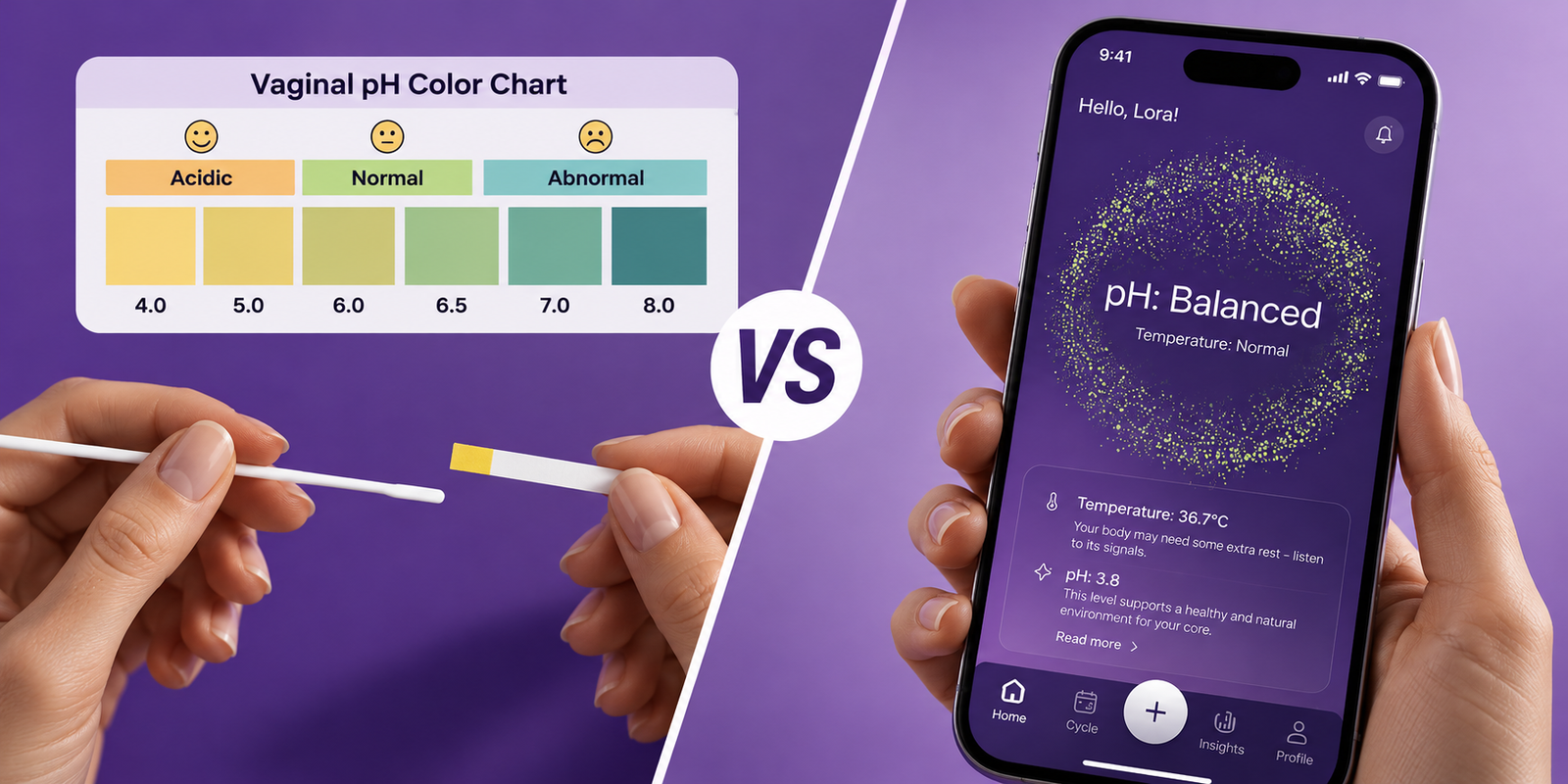
- It helps clinicians choose more targeted tests (pH assessment, microscopy, NAAT panels, or repeat testing when appropriate).
- It reduces “trial and error” self treatment that can sometimes worsen irritation or disrupt the microbiome further.
For an example of how preventing recurrence can depend on restoring a stable vaginal ecosystem (beyond one time treatment), NEJM trial on BV recurrence prevention using Lactin-V.
Conclusion: Early Signals Are Biologically Meaningful
Vaginal symptoms can appear before clinical diagnosis because the body responds to imbalance at a cellular, immune, and microbial level long before disease thresholds are crossed. These sensations can reflect real biological processes rather than subjective misinterpretation.
As scientific understanding of vaginal tissue biology advances, symptom awareness becomes increasingly important not as a replacement for testing, but as a legitimate early signal that can guide more responsive, patient centred care. When clinicians and patients treat early symptoms as meaningful data, the result is often better timing, better testing, and better outcomes.